How to Install Brushless Motor: Complete 2025 Guide
Installing a brushless motor requires proper preparation, correct wiring techniques, and understanding of electronic speed controller (ESC) connections. This comprehensive guide covers everything from initial setup to final testing, ensuring your brushless motor installation delivers optimal performance and reliability in 2025.
Pre-Installation Requirements and Planning
Before beginning your brushless motor installation, gathering the right components and understanding system requirements is crucial for success. Unlike brushed motors, brushless systems require an electronic speed controller (ESC) to function properly. The motor’s specifications must match your application’s voltage and current requirements, typically ranging from 7.4V to 22.2V for RC applications in 2025.
Essential components include the brushless motor, compatible ESC rated for at least 20% above motor current draw, proper gauge wiring, connectors, and mounting hardware. Modern brushless motors generate significantly more power than brushed counterparts, requiring robust mounting solutions and adequate cooling airflow for sustained performance.
Choosing the Right Electronic Speed Controller
The ESC serves as the brain of your brushless motor system, converting DC battery power into three-phase AC power. Select an ESC rated for at least 125% of your motor’s maximum current draw to prevent overheating. Popular 2025 ESC options include Castle Creations, Hobbywing, and Spektrum models, with prices ranging from $50-$300 depending on current capacity and features.
Understanding Motor Specifications and Compatibility
Brushless motor specifications include KV rating (RPM per volt), maximum current, and physical dimensions. A higher KV rating produces more speed but less torque, while lower KV provides more torque at reduced speed. For RC cars, typical KV ratings range from 1000-4000, while RC brushless motor applications for drones use 900-2300 KV ratings for optimal efficiency.
Brushless Motor Wiring and Connection Methods
Proper brushless motor wiring involves connecting three motor wires to the ESC’s motor output and connecting the ESC to your receiver and battery. The three motor wires typically use different colors (often blue, yellow, and black) and can be connected in any order initially. If the motor spins backward, simply swap any two motor wires to reverse rotation direction.
Modern 4 wire brushless motor wiring diagrams include the three power wires plus a sensor wire for more precise control. Sensored brushless motors provide smoother acceleration and better low-speed control, making them ideal for RC crawlers and precision applications where smooth operation matters more than peak performance.
3 Wire Brushless Motor Connection Process
Standard 3 wire brushless motor wiring connects directly to ESC motor outputs without sensor feedback. Strip 3-4mm of insulation from each wire end and secure connections using either bullet connectors, direct soldering, or screw terminals. Ensure all connections are tight and properly insulated to prevent short circuits that could damage expensive components.
4 Wire Sensored Motor Installation
Sensored brushless motors include an additional sensor wire that connects to the ESC’s sensor port. This 4 wire brushless motor wiring diagram setup provides position feedback for smoother startup and better low-speed control. The sensor wire typically uses a small connector that plugs directly into the ESC, while the three power wires connect normally to motor outputs.
Physical Installation and Mounting Procedures
Secure mounting ensures your brushless motor operates efficiently without vibration or misalignment issues. Use appropriate mounting screws (typically M3 or M4) and ensure the motor sits flush against the mounting surface. For RC car installations, maintain proper gear mesh between the motor pinion and main gear, typically requiring 0.1-0.2mm backlash for optimal power transfer and component longevity.
Heat dissipation becomes critical during extended operation, so ensure adequate airflow around the motor housing. Many 2025 brushless motor installations benefit from active cooling fans or heat sinks, especially in high-performance applications where motors operate near maximum power output for extended periods.
RC Car Motor Installation Steps
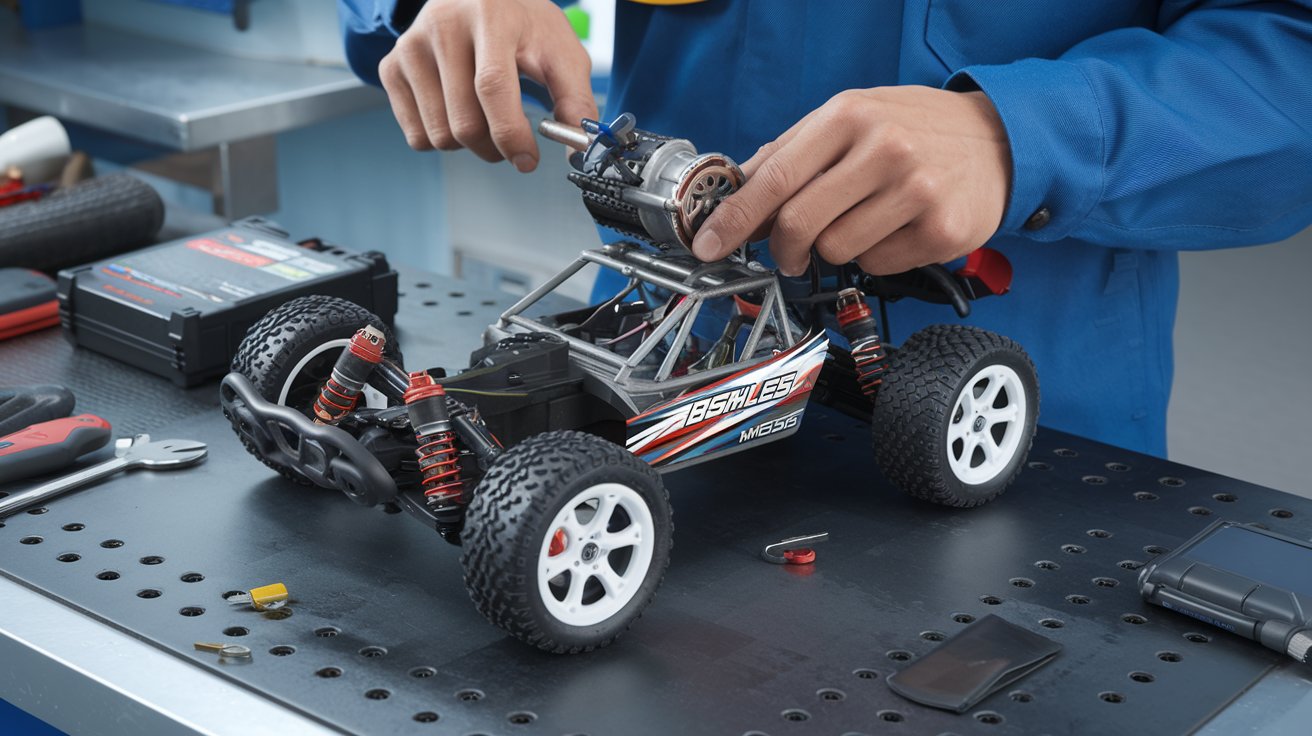
When learning how to install brushless motor on a car, begin by removing the old brushed motor and cleaning the mounting area. Install the new brushless motor using provided mounting screws, ensuring proper alignment with the drivetrain. Adjust the motor position to achieve correct gear mesh, then secure all mounting hardware to manufacturer specifications.
Drone and Multirotor Motor Installation
Drone brushless motor installation requires precise alignment and secure mounting to prevent vibrations affecting flight stability. Use thread locker on motor mounting screws and ensure propeller clearance meets safety requirements. Balance propellers carefully, as imbalanced props create vibrations that reduce motor life and affect flight performance significantly.
Battery Connection and Power System Setup
Understanding how to connect brushless motor to battery involves proper ESC configuration and safety protocols. Connect the battery to the ESC’s power input using appropriate connectors (XT60, XT90, or Deans connectors are common in 2025). Always connect the battery last and disconnect it first to prevent accidental motor activation during installation or maintenance.
Battery selection impacts motor performance significantly, with higher voltage increasing speed and power output. Most RC applications use 2S-6S LiPo batteries (7.4V-22.2V), while larger applications may require higher voltage systems. Ensure your brushless motor wiring can handle the chosen voltage and current levels safely.
ESC Programming and Calibration
After physical installation, ESC programming optimizes motor performance for your specific application. Most modern ESCs include programming cards or smartphone apps for easy configuration. Key settings include motor timing, brake strength, battery cutoff voltage, and throttle response curves. Proper calibration ensures smooth operation and maximizes battery life during operation.
Calibrate throttle endpoints by following your ESC manufacturer’s instructions, typically involving full throttle and full brake positions while powered on. This process ensures your brushless motor system responds correctly to transmitter inputs and prevents unexpected behavior during operation.
Motor Timing and Performance Optimization
Motor timing affects power output and efficiency significantly in brushless motor systems. Advanced timing increases power but reduces efficiency and increases heat generation. Start with manufacturer recommended settings, then adjust incrementally while monitoring motor temperature to find optimal performance without overheating.
Throttle Curve and Response Settings
Throttle curve programming allows customization of brushless motor response characteristics. Linear curves provide predictable acceleration, while exponential curves offer gentle initial response with aggressive high-end power. Racing applications typically use aggressive curves, while crawling or precision applications benefit from gentle, linear throttle response.
Testing and Troubleshooting Common Issues
Initial testing should occur at reduced throttle levels to verify proper brushless motor operation and rotation direction. If the motor rotates backward, swap any two of the three motor wires to reverse direction. Monitor motor temperature during initial runs, as properly installed systems should remain warm but not hot to touch during normal operation.
Common installation issues include loose connections causing intermittent operation, incorrect motor timing causing reduced performance, and inadequate cooling leading to thermal shutdown. Address these issues systematically, checking connections first, then ESC settings, and finally mechanical installation aspects.
Diagnosing Connection Problems
Connection issues manifest as jerky operation, loss of power, or complete failure to start. Check all brushless motor wiring connections for tightness and proper insulation. Use a multimeter to verify continuity and resistance values match motor specifications. Poor connections generate heat and can damage expensive components over time.
Performance Issues and Solutions
Performance problems often result from incorrect ESC programming or mechanical issues like poor gear mesh or binding components. Verify ESC settings match motor specifications and application requirements. Check mechanical systems for smooth operation and proper alignment to ensure optimal power transfer and component longevity.
Related video about how to install brushless motor
This video complements the article information with a practical visual demonstration.
FAQ – Common Questions
Does brushless motor wiring matter?
Yes, proper brushless motor wiring is crucial for safe operation and optimal performance. While the three motor wires can initially be connected in any order, incorrect connections can cause backward rotation, reduced efficiency, or component damage. Always use appropriate wire gauges and secure connections to handle the motor’s current requirements safely.
What are the downsides of a brushless motor?
Brushless motors require more complex installation with ESCs, cost more initially than brushed motors, and need programming for optimal performance. They’re also more sensitive to voltage fluctuations and require proper cooling in high-performance applications. However, their efficiency and longevity typically offset these disadvantages.
What do I need to run a brushless motor?
Essential components include the brushless motor, compatible ESC rated for motor current, appropriate battery pack, receiver for control, transmitter, proper gauge wiring, and connectors. You’ll also need mounting hardware and potentially cooling solutions depending on your application’s power requirements.
Can I run a brushless motor without ESC?
No, brushless motors cannot operate without an Electronic Speed Controller (ESC). Unlike brushed motors that run directly from DC power, brushless motors require the ESC to convert DC battery power into the three-phase AC power needed for operation and to control motor speed and direction.
How do I know if my brushless motor is installed correctly?
A correctly installed brushless motor should start smoothly, run quietly without excessive vibration, rotate in the intended direction, and maintain reasonable operating temperatures. Check that all connections are secure, the motor mounting is rigid, and ESC programming matches your motor specifications for optimal performance.
What’s the difference between sensored and sensorless brushless motors?
Sensored brushless motors include position sensors that provide feedback to the ESC for smoother startup and better low-speed control, using 4-wire connections. Sensorless motors use 3-wire connections and rely on back-EMF for position detection, offering simpler installation but less precise low-speed control. Choose based on your application’s smoothness requirements.
| Installation Aspect | Key Requirements | Performance Benefit |
|---|---|---|
| ESC Selection | 125% motor current rating | Prevents overheating and ensures reliability |
| Motor Wiring | Secure 3 or 4 wire connections | Optimal power transfer and smooth operation |
| Physical Mounting | Rigid mount with proper gear mesh | Reduces vibration and maximizes efficiency |
| ESC Programming | Calibrated timing and throttle curves | Customized performance for specific applications |