Best RC Battery Chargers 2025: Complete Buying Guide
Choosing the right RC battery charger is crucial for maintaining your remote control vehicles and extending battery life. With advancing technology in 2025, modern battery chargers offer enhanced safety features, faster charging capabilities, and compatibility with multiple battery types including LiPo, NiMH, and Li-ion batteries.
Understanding RC Battery Charger Types
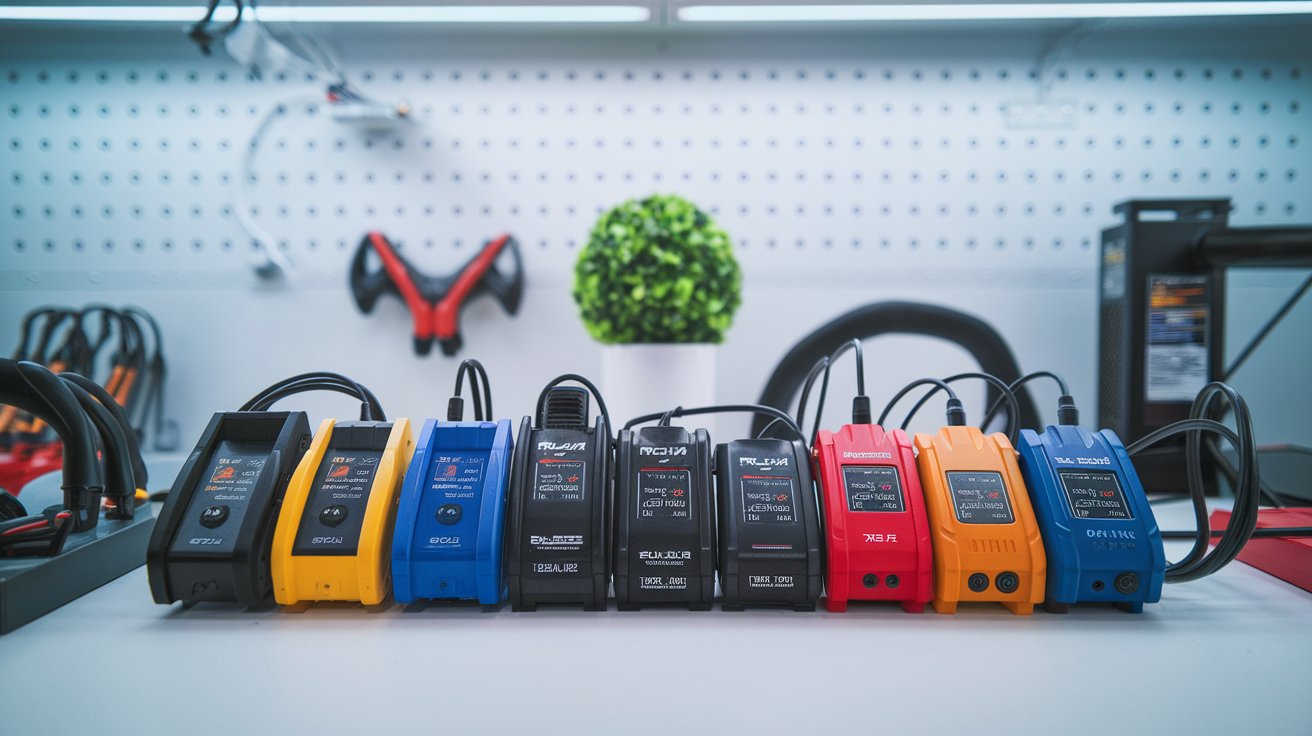
The RC battery charger market offers several distinct types designed for different applications and battery chemistries. Basic AC chargers provide simple plug-and-charge functionality, while advanced DC chargers offer precise control over charging parameters. Multi-chemistry chargers have become increasingly popular in 2025, supporting LiPo, NiMH, Li-ion, and lead-acid batteries within a single unit.
Smart chargers represent the latest evolution in battery charging technology, featuring microprocessor control, LCD displays, and automated charging programs. These units can detect battery type, cell count, and optimal charging rates automatically, making them ideal for both beginners and experienced RC enthusiasts.
AC vs DC Battery Chargers
AC battery chargers plug directly into household outlets and are perfect for home use. They typically offer 110-240V compatibility and are more affordable than DC alternatives. DC chargers require a 12V power source but provide portability for field charging and often deliver higher power output for faster charging cycles.
Multi-Chemistry Charging Capabilities
Modern RC battery chargers support multiple battery chemistries through adaptive algorithms. LiPo batteries require precise voltage monitoring and balance charging, while NiMH batteries benefit from delta-peak detection charging. Advanced chargers automatically adjust parameters based on connected battery type, ensuring optimal charging performance and safety.
Essential Features for RC Battery Chargers
Safety features are paramount in 2025 RC battery chargers, with thermal protection, reverse polarity protection, and short circuit prevention becoming standard. Balance charging capability is essential for multi-cell LiPo batteries, ensuring each cell reaches optimal voltage levels. Display screens provide real-time monitoring of voltage, current, capacity, and charging time.
Power output determines charging speed, with most quality battery chargers offering 50-200 watts of power. Higher wattage units can charge batteries faster but require adequate cooling systems. Memory functions store preferred settings for different battery types, streamlining the charging process for multiple battery configurations.
Top RC Battery Charger Brands 2025
Leading manufacturers like SkyRC, ISDT, and Hitec dominate the RC battery charger market with innovative designs and reliable performance. SkyRC offers professional-grade chargers with advanced programming capabilities, while ISDT focuses on compact, portable units with smartphone connectivity. Hitec provides versatile multi-chemistry chargers suitable for various RC applications.
Newer brands like ToolkitRC and Ultra Power have gained market share by offering feature-rich battery chargers at competitive prices. These manufacturers incorporate touchscreen interfaces, wireless charging monitoring, and USB-C connectivity in their 2025 product lines.
LiPo Battery Charging Requirements
LiPo batteries require specialized RC battery chargers with balance charging capabilities to maintain cell voltage uniformity. Charging rates should not exceed 1C for standard LiPo batteries, with many users preferring 0.5C rates for longevity. Temperature monitoring prevents thermal runaway, a critical safety concern with lithium polymer batteries.
Proper LiPo battery charging involves constant current followed by constant voltage phases, with the charger automatically transitioning between modes. Storage charging at 3.8V per cell is recommended for long-term battery health when batteries won’t be used for extended periods.
Balance Charging Technology
Balance charging ensures each cell in a multi-cell LiPo battery reaches identical voltage levels during charging. Quality RC battery chargers monitor individual cell voltages and adjust charging current accordingly. This process prevents cell damage and extends overall battery lifespan significantly.
LiPo Safety Protocols
Modern RC battery chargers incorporate multiple safety mechanisms for LiPo batteries, including overvoltage protection, undervoltage cutoff, and thermal monitoring. Charging should always occur in fireproof containers or LiPo safe bags, and users should never leave charging batteries unattended.
NiMH Battery Charging Considerations
NiMH batteries require different charging algorithms compared to lithium-based batteries, with RC battery chargers using delta-peak detection or negative delta-V methods to determine charge completion. These batteries can handle faster charging rates than LiPo batteries but generate more heat during the process.
Quality NiMH battery chargers include temperature monitoring and trickle charge modes for maintaining full capacity. Proper cycling through discharge and charge phases helps prevent memory effect, though modern NiMH batteries are less susceptible to this issue than older nickel-cadmium batteries.
Charging Power and Speed Considerations
Charging power determines how quickly your RC battery charger can replenish battery capacity, with higher wattage units offering faster charging times. A 100W charger can typically charge a 5000mAh 3S LiPo battery in approximately 45 minutes, while a 200W charger reduces this time to around 25 minutes.
Power supply requirements must match charger specifications, with DC chargers needing adequate 12V sources and AC units requiring stable household power. Many high-performance battery chargers include switching power supplies that adapt to various input voltages automatically.
Field Charging Solutions
Portable RC battery chargers enable field charging during racing events or extended flying sessions. These units typically run on 12V car batteries or portable power stations, offering the same functionality as home-based chargers. Compact designs and rugged construction are essential for field charging applications.
Battery-powered charging stations have emerged in 2025, featuring integrated lithium power banks capable of charging multiple RC batteries without external power sources. These solutions provide ultimate portability for remote flying locations or extended outdoor sessions.
Smart Charging Technology 2025
Smart RC battery chargers incorporate artificial intelligence and machine learning algorithms to optimize charging parameters automatically. These systems learn from previous charging cycles and adjust settings for maximum battery longevity and performance. Smartphone connectivity allows remote monitoring and control of charging sessions.
Cloud-based charging data analysis helps users track battery health over time and predict replacement needs. Advanced smart chargers can recommend optimal charging rates based on battery age, usage patterns, and environmental conditions.
App Integration Features
Modern RC battery chargers connect to smartphones via WiFi or Bluetooth, providing detailed charging analytics and remote control capabilities. Apps display real-time charging graphs, historical data, and maintenance reminders. Push notifications alert users when charging cycles complete or errors occur.
Automated Charging Programs
Intelligent charging programs automatically detect battery specifications and select optimal charging parameters. These smart chargers can distinguish between different battery chemistries, cell counts, and capacity ratings without user input. Custom programs allow advanced users to create specialized charging profiles for specific applications.
Budget Considerations and Value
Entry-level RC battery chargers start around $30-50 for basic single-chemistry units suitable for beginners. Mid-range chargers in the $80-150 range offer multi-chemistry support, balance charging, and enhanced safety features. Professional-grade units cost $200-500 but provide advanced programming, higher power output, and commercial-grade reliability.
Value considerations extend beyond initial purchase price, including power efficiency, charging speed, and longevity. Quality battery chargers often pay for themselves through extended battery life and reduced replacement costs. Warranty coverage and manufacturer support are crucial factors for long-term value assessment.
Related video about rc battery charger
This video complements the article information with a practical visual demonstration.
Questions & Answers
What is the best RC battery charger for beginners?
For beginners, a basic AC multi-chemistry charger with balance charging capability is ideal. Look for units with automatic battery detection, safety features like thermal protection, and simple operation. Budget-friendly options from SkyRC or Hitec offer excellent starting points with power outputs around 50-80 watts, sufficient for most entry-level RC applications.
How long does it take to charge RC batteries?
Charging time depends on battery capacity, charger power output, and charging rate. A 5000mAh LiPo battery typically charges in 30-60 minutes with a 100W charger at 1C rate. NiMH batteries may take slightly longer due to different charging algorithms. Always follow manufacturer recommendations for optimal charging rates and safety.
Can I use one charger for different battery types?
Yes, multi-chemistry RC battery chargers support various battery types including LiPo, NiMH, Li-ion, and lead-acid batteries. Modern smart chargers automatically detect battery chemistry and adjust charging parameters accordingly. This versatility makes multi-chemistry chargers excellent investments for RC enthusiasts with diverse battery collections.
What safety features should I look for in an RC battery charger?
Essential safety features include reverse polarity protection, short circuit protection, thermal monitoring, and overvoltage protection. For LiPo batteries, balance charging capability is crucial. Look for chargers with automatic cutoff functions, cooling fans, and error detection systems. Always charge batteries in fireproof containers for maximum safety.
Do I need a DC or AC RC battery charger?
AC chargers plug directly into wall outlets and are perfect for home use, offering convenience and typically lower cost. DC chargers require 12V power sources but provide field charging capability and often higher power output. Many users prefer DC chargers with AC power supply adapters for maximum versatility in charging locations.
How much should I spend on an RC battery charger?
Budget $50-100 for a quality entry-level multi-chemistry charger suitable for most hobby applications. Serious enthusiasts should consider $150-300 range chargers with advanced features, higher power output, and enhanced safety systems. Professional users may require $300+ chargers with commercial-grade reliability and specialized programming capabilities.
| Charger Type | Best For | Key Benefits |
|---|---|---|
| AC Multi-Chemistry | Home charging, beginners | Convenience, affordability, safety |
| DC Smart Charger | Field charging, advanced users | Portability, high power, versatility |
| Professional Grade | Commercial use, racing | Speed, reliability, advanced features |