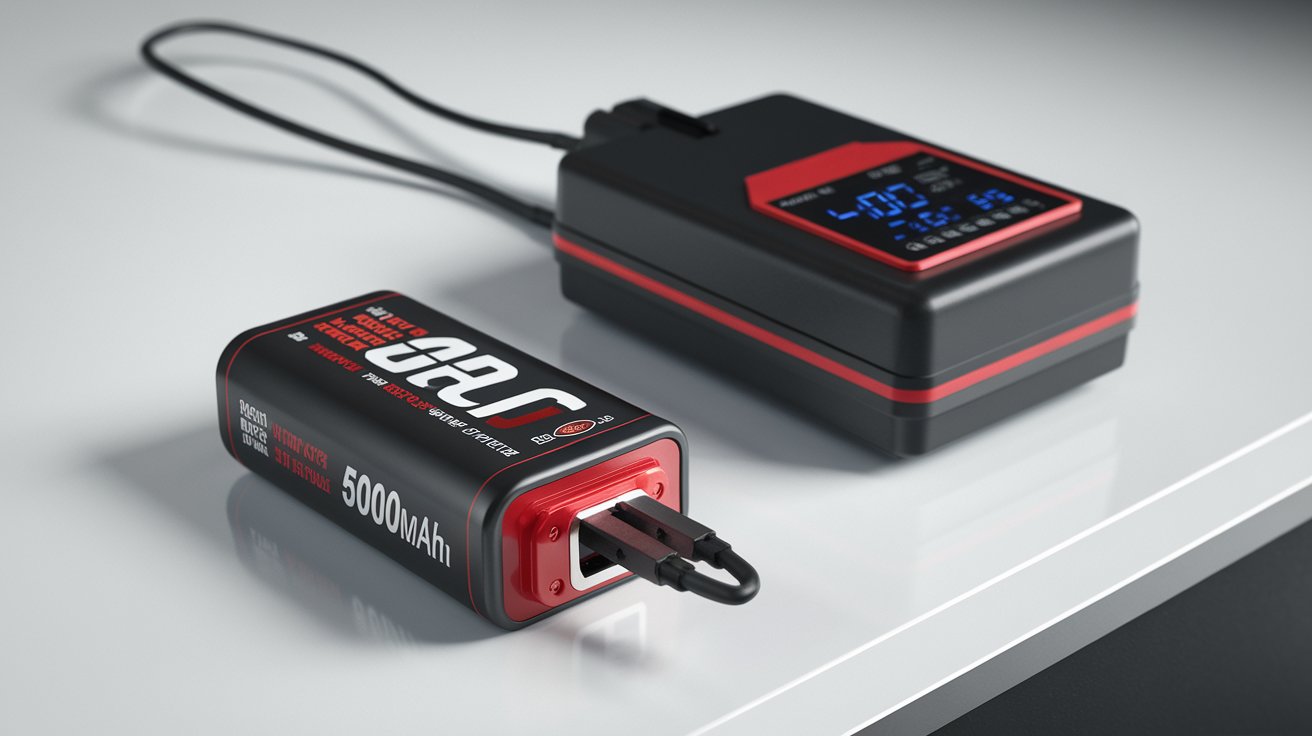
4S LiPo Battery Guide: Best Capacities & Chargers 2025
A 4S LiPo battery delivers 14.8V nominal voltage and represents one of the most versatile power solutions for RC aircraft, drones, and surface vehicles. With capacities ranging from 5000mAh to 20000mAh, these lithium polymer batteries provide the perfect balance of power density and runtime for demanding applications across the United States RC community.
Understanding 4S LiPo Battery Voltage and Configuration
The 4S LiPo battery voltage configuration consists of four lithium polymer cells connected in series, each contributing 3.7V nominal voltage for a total of 14.8V. When fully charged, a 4S pack reaches 16.8V (4.2V per cell), while the safe discharge cutoff typically occurs at 12.8V (3.2V per cell). This voltage range makes 4S LiPo batteries ideal for high-performance applications requiring substantial power output.
The series configuration multiplies voltage while maintaining the capacity rating of individual cells. For example, a 4S LiPo battery 5000mAh contains four 5000mAh cells arranged to deliver 14.8V at 5000mAh capacity. This configuration provides excellent power-to-weight ratios compared to equivalent 2S or 3S alternatives, making it the preferred choice for competitive RC racing and aerobatic flying.
Popular 4S LiPo Battery Capacities for Different Applications
Selecting the appropriate 4S LiPo battery capacity depends on your specific application requirements, flight duration needs, and weight constraints. The US RC market offers extensive capacity options from 3000mAh to 20000mAh, each serving distinct performance profiles and use cases.
Medium Capacity Options: 5000mAh to 8000mAh
The 4S LiPo battery 5000mAh represents the sweet spot for most RC aircraft applications, providing 15-20 minutes of aggressive flying while maintaining manageable weight around 600-700 grams. These batteries excel in 3D aerobatic planes, sport flying, and medium-sized multirotors. The 4S LiPo battery 6000mAh extends runtime by 20% while adding only 100-150 grams, making it ideal for scale aircraft and longer duration flights.
For applications requiring extended performance, the 4S LiPo battery 8000mAh delivers exceptional runtime at approximately 900-1000 grams total weight. These higher capacity packs work excellently in large-scale aircraft, FPV racing drones requiring endurance, and surface vehicles where weight is less critical than operational time.
High Capacity Solutions: 10000mAh to 20000mAh
The 4S LiPo battery 10000mAh serves professional applications and large-scale models where maximum runtime justifies the additional weight penalty of 1200-1400 grams. These batteries commonly power commercial drones, large RC helicopters, and ground vehicles requiring extended operation periods.
At the extreme end, the 4S LiPo battery 20000mAh provides exceptional capacity for specialized applications including long-range FPV flights, commercial inspection drones, and stationary power systems. Weighing 2500-3000 grams, these batteries require careful integration but deliver unmatched operational endurance for professional users across the United States.
Essential 4S LiPo Battery Charger Requirements
Proper charging equipment is crucial for 4S LiPo battery safety and longevity. A quality 4S LiPo battery charger must provide individual cell monitoring, balanced charging capabilities, and appropriate current output to safely charge these high-voltage packs. Modern chargers designed for 4S configuration automatically detect cell count and adjust charging parameters accordingly.
Balance charging ensures all four cells reach identical voltage levels, preventing dangerous cell imbalances that can lead to reduced performance or safety hazards. Professional-grade 4S LiPo battery chargers available in the US market feature programmable charge rates, typically ranging from 1A to 10A, allowing users to optimize charging speed versus battery health based on their specific needs and time constraints.
4S LiPo Battery XT90 Connector Advantages
The 4S LiPo battery XT90 connector has become increasingly popular due to its superior current handling capabilities and robust construction. XT90 connectors safely handle continuous currents up to 90 amperes, making them ideal for high-performance 4S LiPo batteries used in racing applications and aggressive aerobatic flying where power demands exceed standard connector limitations.
Compared to traditional XT60 connectors, XT90 connectors provide reduced resistance, better heat dissipation, and improved reliability under extreme conditions. The larger contact area and gold-plated pins ensure consistent electrical connection even after hundreds of connection cycles, making them the preferred choice for serious RC enthusiasts prioritizing performance and durability.
Safety Considerations for 4S LiPo Battery Operation
Operating 4S LiPo batteries safely requires understanding their higher energy density and voltage characteristics compared to lower cell count alternatives. The 16.8V fully charged voltage demands compatible electronic speed controllers, servos, and other system components rated for this voltage range. Using inadequate components can result in equipment failure or safety hazards.
Storage and Handling Best Practices
Proper 4S LiPo battery storage involves maintaining cells at storage voltage (approximately 3.8V per cell or 15.2V total) and storing in fireproof containers away from combustible materials. Temperature control is critical, with ideal storage temperatures between 40-70°F to minimize capacity degradation and extend battery life.
Discharge and Usage Guidelines
Never discharge 4S LiPo batteries below 3.2V per cell (12.8V total) to prevent permanent damage and potential safety risks. Implement low voltage alarms or telemetry systems to monitor battery condition during use. High discharge rates generate heat, so allow cooling periods between aggressive use cycles to maintain optimal battery health and performance.
Performance Comparison Across Different Capacities
Weight-to-performance ratios vary significantly across 4S LiPo battery capacity ranges, with smaller packs offering better power-to-weight ratios while larger capacities provide extended runtime. A typical 4S LiPo battery 5000mAh delivers approximately 8.3 Wh/gram, while a 4S LiPo battery 10000mAh achieves around 7.1 Wh/gram due to increased structural requirements for larger cells.
Discharge rate capabilities also scale with capacity, as larger 4S LiPo batteries typically support higher continuous and burst current ratings. This makes high-capacity options suitable for applications requiring sustained high power output, while smaller capacities excel in weight-sensitive applications prioritizing agility over endurance.
Compatibility with RC Electronics and ESCs
Modern electronic speed controllers designed for 4S LiPo battery compatibility feature built-in voltage regulation and battery monitoring systems. These ESCs automatically adjust motor timing and power delivery based on battery voltage, ensuring optimal performance throughout the discharge cycle while protecting both the battery and motor from damage.
Servo compatibility requires careful consideration, as standard analog servos may not handle 4S LiPo battery voltage without regulation. Digital servos and high-voltage servos designed for 4S operation provide improved precision and faster response times, taking full advantage of the increased voltage available from these battery configurations.
Cost Analysis and Value Considerations in 2025
The 4S LiPo battery market in the United States has seen significant price reductions in 2024-2025, with quality 5000mAh packs available from $40-80 depending on discharge rating and brand reputation. Higher capacity options like 4S LiPo battery 20000mAh range from $150-300, reflecting the increased material costs and specialized manufacturing requirements.
Cost per amp-hour generally decreases with larger capacities, making high-capacity 4S LiPo batteries more economical for applications requiring extended runtime. However, smaller packs often provide better value for weight-sensitive applications where the additional capacity cannot be effectively utilized due to aircraft or vehicle limitations.
Future Trends in 4S LiPo Battery Technology
Advanced cell chemistry improvements in 2025 have enhanced 4S LiPo battery energy density by 15-20% compared to 2023 specifications while improving cycle life and safety characteristics. Silicon nanowire anodes and solid-state electrolytes are beginning to appear in premium 4S LiPo batteries, promising even greater performance improvements in the near future.
Smart battery management systems integrated directly into 4S LiPo battery packs provide real-time cell monitoring, usage tracking, and predictive maintenance alerts via smartphone applications. These technological advances are transforming battery management from reactive maintenance to proactive optimization, significantly extending battery life and improving safety margins for RC enthusiasts across the United States.
Related video about 4s lipo battery
This video complements the article information with a practical visual demonstration.
What you should know
What voltage should a fully charged 4S LiPo battery read?
A fully charged 4S LiPo battery should read 16.8V total (4.2V per cell). The nominal voltage is 14.8V, and you should never discharge below 12.8V (3.2V per cell) to prevent permanent damage. Most RC applications work best when the battery voltage stays above 13.2V under load for optimal performance.
How long does a 4S LiPo battery 5000mAh typically last during flight?
A 4S LiPo battery 5000mAh typically provides 15-25 minutes of flight time depending on aircraft size, flying style, and power requirements. Aggressive 3D flying may reduce this to 10-15 minutes, while gentle sport flying can extend runtime to 25-30 minutes. Always monitor voltage to ensure safe landing reserves.
Can I use a regular charger for my 4S LiPo battery?
No, you need a 4S LiPo battery charger specifically designed for lithium polymer batteries with 4S capability. These chargers provide essential balance charging, individual cell monitoring, and proper voltage/current regulation. Using inappropriate chargers can cause fires, explosions, or permanent battery damage. Always verify your charger supports 4S configuration before use.
What’s the difference between XT60 and XT90 connectors on 4S LiPo batteries?
XT90 connectors on 4S LiPo batteries handle up to 90 amps continuous current compared to XT60’s 60-amp rating. XT90 provides larger contact area, reduced resistance, and better heat dissipation for high-performance applications. Choose 4S LiPo battery XT90 options for racing, aerobatics, or any application exceeding 60 amps continuous draw.
How should I store my 4S LiPo battery when not in use?
Store 4S LiPo batteries at storage voltage (15.2V total or 3.8V per cell) in a fireproof container at room temperature. Avoid extreme temperatures and check voltage monthly, recharging to storage level if needed. Proper storage significantly extends battery life and maintains capacity over time while ensuring safety.
Is a 4S LiPo battery 20000mAh worth the extra weight?
A 4S LiPo battery 20000mAh weighing 2500-3000 grams is worthwhile for applications requiring maximum runtime like commercial drones, long-range FPV, or ground vehicles. For aircraft where weight affects performance, smaller capacities like 5000-8000mAh typically provide better power-to-weight ratios and superior flight characteristics.
| Capacity Range | Typical Weight | Best Applications |
|---|---|---|
| 5000-6000mAh | 600-750g | Sport aircraft, 3D aerobatics, medium drones |
| 8000-10000mAh | 900-1400g | Large aircraft, FPV endurance, professional drones |
| 20000mAh+ | 2500-3000g | Commercial operations, ground vehicles, stationary power |